
What if everything you learned about occlusal adjustment was wrong?Articulating paper is the LAST step... not the first!Discover what comes before and put an end to callbacks, remakes and endless occlusal equilibration.

"Doctor, it still feels high… I'm going to have to come back again."

"Doctor, my bite feels so natural I can't even tell you touched my teeth."
Let's be honest
Every time you have to equilibrate an occlusion,
a voice in your head starts up:

“I marked with articulating paper, occlusion looks balanced… but will the patient come back complaining again?”
“I equilibrated exactly where the paper marked and it got worse. Was that really the interference?”
“The patient left satisfied, but I'm not sure I got it right. I'm working blind.”
“This is the third time this patient has returned. I don't know what else to adjust without wrecking the restoration.”
“I just hope the patient doesn't notice, because I have no idea where the real problem is.”
“I marked with articulating paper, occlusion looks balanced… but will the patient come back complaining again?”
“I equilibrated exactly where the paper marked and it got worse. Was that really the interference?”
“The patient left satisfied, but I'm not sure I got it right. I'm working blind.”
“This is the third time this patient has returned. I don't know what else to adjust without wrecking the restoration.”
“I just hope the patient doesn't notice, because I have no idea where the real problem is.”
WHAT NOBODY TOLD YOU
You're making two mistakes every time you equilibrate — and you don't even know it.
It's not your fault. It's how everyone was trained. But it's exactly why the patient keeps coming back.
You start with articulating paper. It should be the final step.
Articulating paper only registers static contacts — a frozen snapshot of a system that moves in three dimensions. When you start there, you're grinding the symptom. The real cause of the discomfort lies in occlusal interferences that paper simply does not mark. That's why you grind, grind, grind… and the patient keeps coming back.
You adjust without respecting the patient's occlusal morphology and function.
Without a morphofunctional criterion, every grind is a shot in the dark. You don't know if you're preserving what should be preserved or destroying what should be protected — cusps, fossae, guidance surfaces. The result? Endless equilibration, lost tooth structure and zero predictability. There is a functional logic that tells you exactly what to reduce, where and why — before you ever pick up the articulating paper.
When you correct those two mistakes, the adjustment resolves on the first visit. No callbacks. No remakes. No guesswork.
6 reasons to master the adjustment that goes beyond articulating paper. Even this week.

Get it right on the first visit — end the callback cycle
The method targets the true cause of discomfort, not what articulating paper shows on the surface. Result: a patient truly discharged, no “come back next week”.
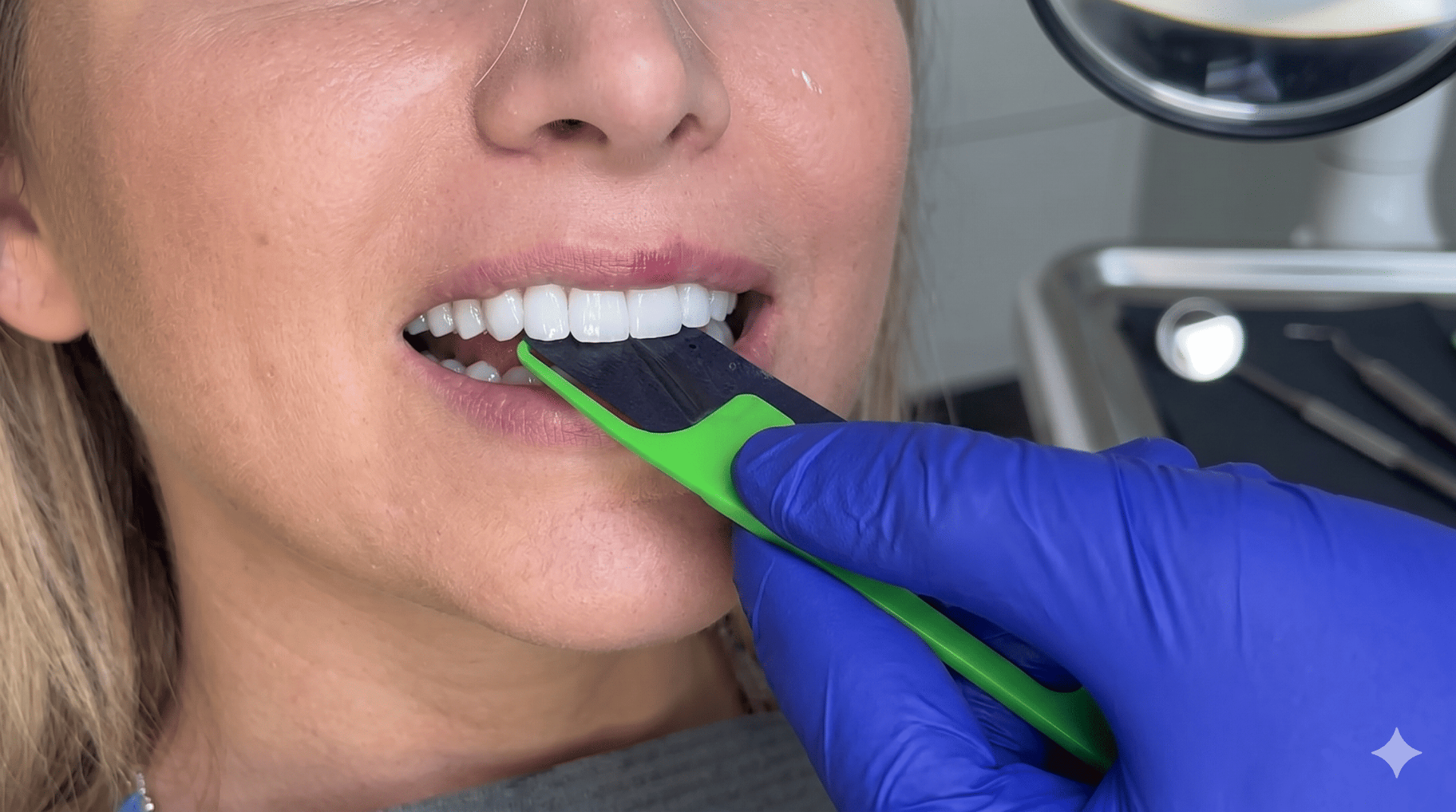
Know what to do BEFORE reaching for the articulating paper
There is a stage that comes before the paper and eliminates most of the problems. That's why your “perfect on paper” adjustments still fail: the interference was where the paper doesn't reach.
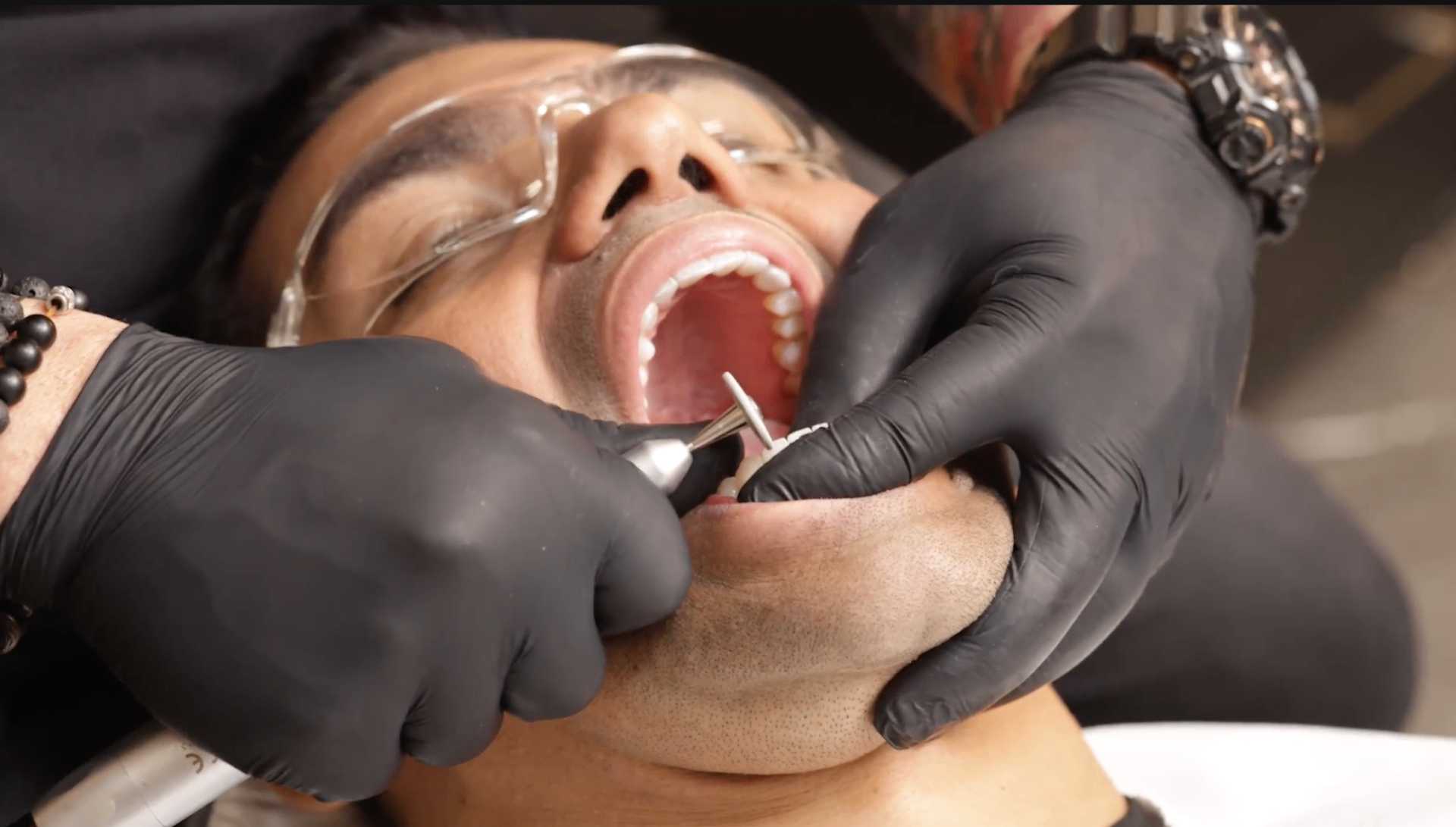
Know exactly what to reduce, where and why
No more freehanding it. Every reduction follows a clear morphofunctional criterion. Never grind blind hoping it'll work out again.
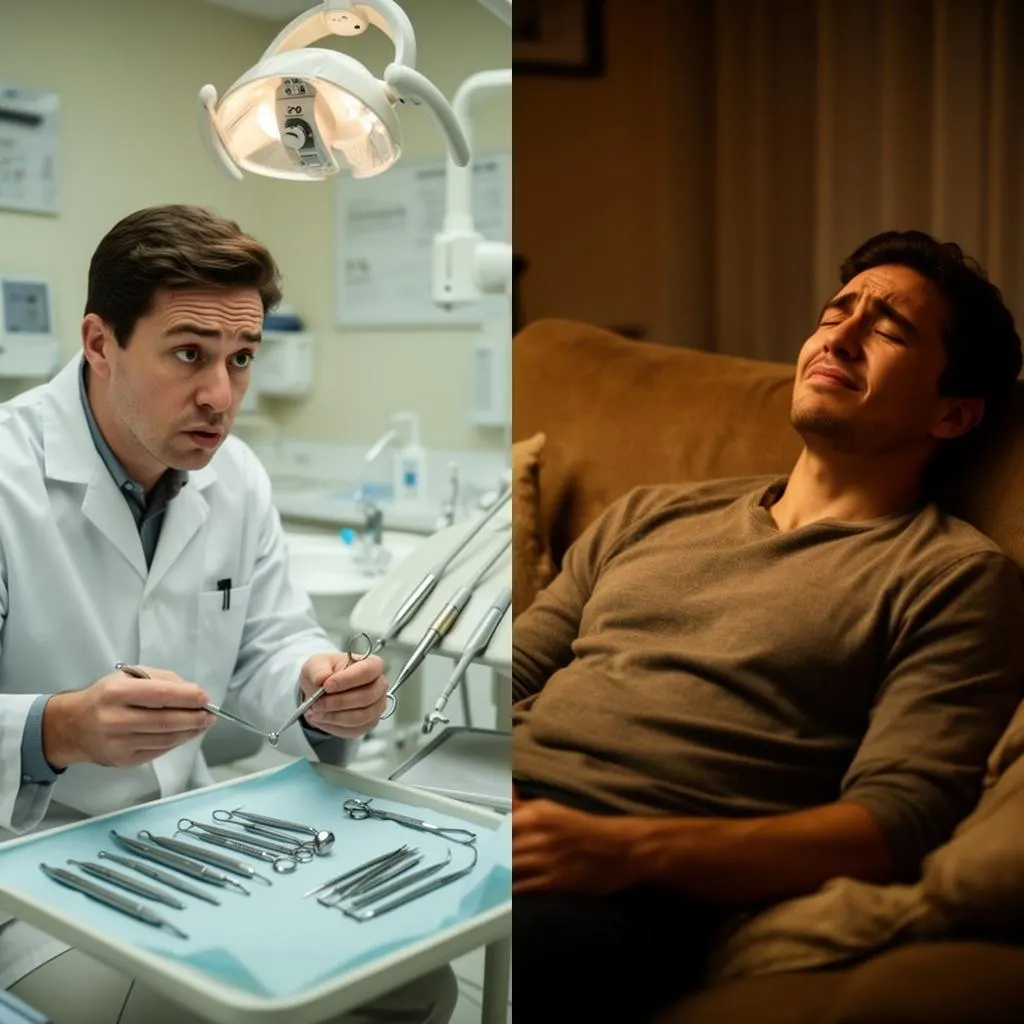
Understand why a “perfect” chairside adjustment fails once the patient walks out
There is a mandibular positioning error almost every dentist makes. You adjust it “perfectly” in centric — the occlusion changes the moment the patient stands up. That single detail explains months of callbacks with no solution.

Eliminate rework that costs time, money and reputation
Every callback for a “quick touch-up” is unbilled chair time, eroded trust and a patient close to walking. The method resolves it once because it treats the cause, not the symptom.

Apply it to any case: direct restorations, full-mouth rehabilitation, post-orthodontics
The protocol works regardless of material or case complexity. And there's an entire module dedicated to those patients nobody knows how to adjust.
Clinicians already using the method
Dentists who broke out of the cycle of endless callbacks.
“Within two weeks of applying the method I stopped seeing callbacks for occlusal discomfort. It changed my daily practice.”
Dr. Marianne Lopez
New York · USA
“I used to get stuck on post-orthodontic cases. Now I follow the protocol step by step and patients leave the chair relieved after the first session.”
Dr. Philip Andrews
London · UK
“I thought I knew how to adjust an occlusion. The course showed me everything I was doing wrong by starting with the articulating paper. Worth every penny.”
Dr. Camila Reid
Toronto · CA
+3,000 students · +25 countries · 17 years of teaching
The method in 6 steps: from diagnosis to final polishing, without guesswork and without endless adjustments.
Analyze the case with criteria before touching the tooth
A clear occlusal diagnosis before any reduction. You'll know exactly what must be adjusted and what must not be touched.
Perform the adjustments articulating paper would never detect
There are occlusal interferences that cause discomfort and rework yet simply don't register on paper. Here you learn to identify and eliminate them.
Correct following morphology and function, not guesswork
Adjust what needs to be adjusted following a functional logic — not the trial-and-error that generates unnecessary tooth wear.
Document the difference (before and after)
Visually prove that the adjustment solved the problem without compromising the restoration. Your clinical and legal safety net.
Now yes: use articulating paper as the final refinement
With the patient in the correct position, refine the last details. Articulating paper is the END of the process, never the beginning.
Polishing, validation and confident discharge
Finish correctly and discharge the patient knowing they won't need to return. No “let's see how it settles”. Resolved on the first visit.
You don't just get lectures… you get a complete system to end endless equilibration once and for all.
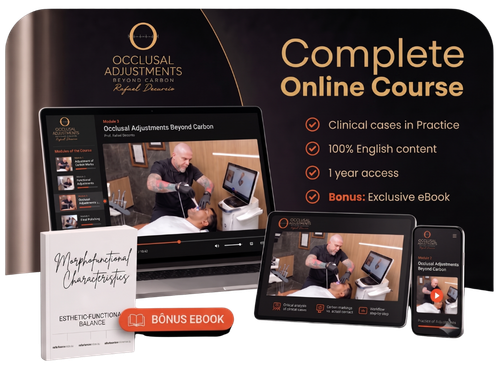
Full Clinical Case: Occlusal Adjustment on a Rehabilitated Patient
Filmed classes with a real patient, from start to finish. You watch the entire method executed live. Every adjustment decision explained in real time.
Post-Orthodontic Occlusal Adjustment: Complete Protocol
For those patients with “straight” teeth but full of pain and discomfort. A specific protocol to correct what orthodontics left occlusally unstable.
Instruments and Execution Protocols
The right bur, in the right sequence, for each situation. No guesswork, no destroyed anatomy, no trial and error.
Articulating Paper as the Final Stage: The Refinement
How to use articulating paper the right way: at the right moment, with the patient in the correct position, and with the correct reading. Articulating paper as an ally, not a crutch.
Exclusive bonus
9 Recorded Classes with a Real Clinical Case
From the first reduction to final polishing. Everything filmed, everything explained.
Fundamentals of the method and why articulating paper alone doesn't solve it
The “Beyond Articulating Paper” concept — where the interference lies that paper doesn't reveal
Adjustments in the posterior mandibular region: live clinical case
Advanced adjustments and the particularities of each tooth
Posterior maxillary region and finishing with polishing
Before/after comparison — the proof the method works
Correct use of articulating paper, lateral excursions and patient-type variations
Post-orthodontic occlusal adjustment: complete protocol
Integrated overview and next clinical steps
And it doesn't end there
You'll also receive:
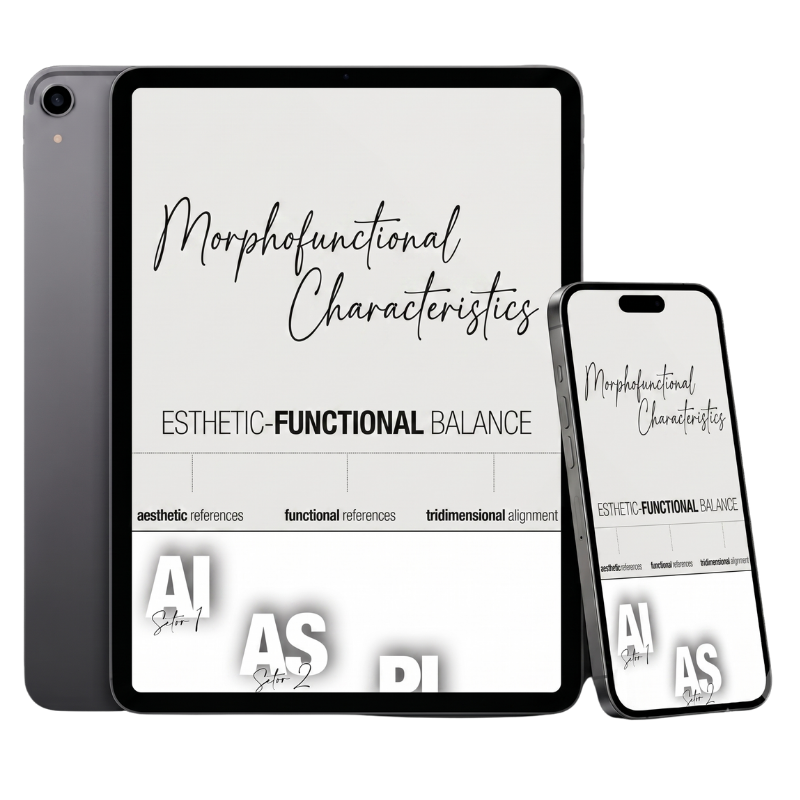
Morphofunctional Features Manual
The guide that drives your adjustments BEFORE the articulating paper. With it you know exactly what to observe, what to preserve and what to correct in each region of the arch, following the functional logic that articulating paper doesn't reveal.
Who is the course Occlusal Adjustments Beyond Articulating Paper for?
- You've had patients returning 1, 2, 3, 4, 5 times complaining about the bite, and you didn't know what else to adjust.
- You've reduced exactly where the articulating paper marked, but the discomfort continued (or got worse).
- You avoid larger cases because you don't trust your occlusal adjustment at the end.
- You've tried to study the topic before, but at the chairside you still feel like you're working blind.
- You see post-orthodontic patients in pain and don't know where to start adjusting.
- You want to stop depending exclusively on articulating paper and have a clear criterion for every reduction.
- You want to eliminate rework, charge higher fees and deliver predictable results in every case.
- Module 1: Full Clinical Case (classes with a real patient)USD 99
- Module 2: Post-Orthodontic Occlusal Adjustment ProtocolUSD 59
- Module 3: Instruments and Execution ProtocolsUSD 39
- Module 4: Articulating Paper as the Final StageUSD 29
- Bonus: Morphofunctional Features ManualUSD 19
ALL OF THIS SHOULD COST
USD 245
92% OFF
1-year access · Watch whenever you want
TODAY, FOR ONLY
USD 29
Access activated immediately by Hotmart
7-day unconditional guarantee. If it's not for you, we refund 100% of your money, no questions asked.
You have two options right now:
Close this page and keep on…
- Starting with articulating paper and hoping the patient doesn't come back.
- Trapped in the endless callback cycle that eats up your time, money and confidence.
- Grinding without criteria, unsure whether you're resolving or making it worse.
Master, once and for all, the adjustment that goes beyond articulating paper.
- Know exactly what to reduce, where and why before ever touching the articulating paper.
- Follow the patient's occlusal morphology and function as your guide, not guesswork.
- Discharge the patient with confidence on the first visit, in any case.
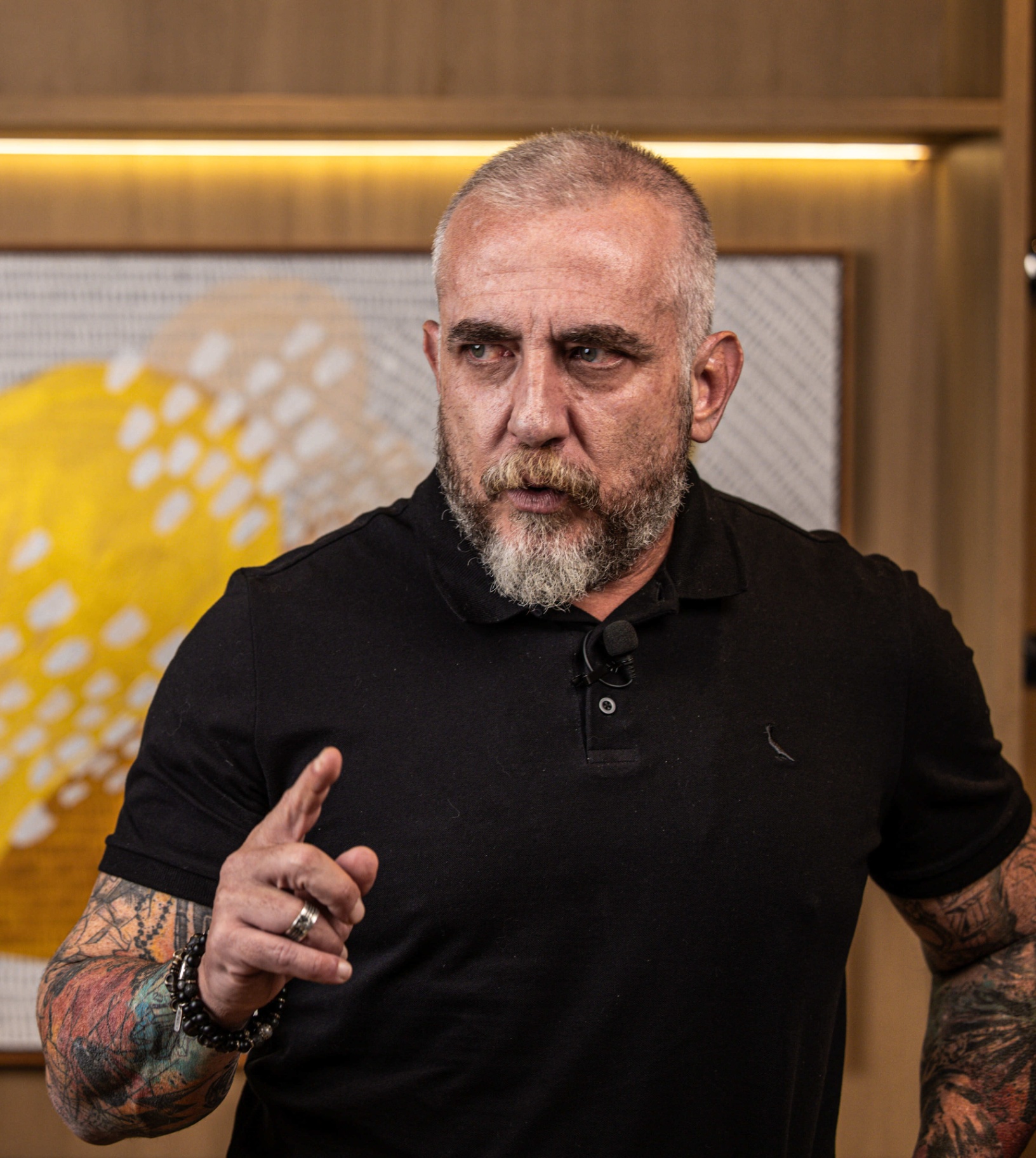
THE MIND BEHIND THE METHOD
Prof. Rafael Decurcio, MSc
Rafael Decurcio has practiced dentistry for over 26 years and has spent the last 17 teaching in postgraduate programs on Esthetic Dentistry and Oral Rehabilitation. His career is defined by a constant pursuit of predictability in high-complexity cases.
- MSc in Oral Rehabilitation, UFU (Brazil).
- Specialist in Periodontics, ABO-GO.
- International reference: has lectured in +25 countries across Latin America and Europe.
- Academic leader: coordinator of the Latin American Specialization Course in Esthetic Dentistry and Oral Rehabilitation, and of the Clinical Improvement Course in Complex Oral Rehabilitation Cases (ABO-GO).
- Published author: “Veneers: Contact Lenses and Ceramic Fragments”, with editions in Portuguese, Spanish and English.
- Researcher: author of numerous national and international scientific articles that back his clinical practice.